
'/%3e%3cdefs%3e%3clinearGradient%20id='prefix__paint0_linear_4737_37157'%20x1='3.018'%20y1='23.6'%20x2='44.925'%20y2='24.977'%20gradientUnits='userSpaceOnUse'%3e%3cstop%20stop-color='%231CB7FF'/%3e%3cstop%20offset='.502'%20stop-color='%232FF58B'/%3e%3c/linearGradient%3e%3c/defs%3e%3c/svg%3e)


Why Italy’s latest World Cup disaster is now the norm
Apr 01 2026 12:10 · By onefootball.com · 19 Reads


So it will remain the case that the last kick of a ball in an Azzurri shirt in a World Cup in the United States will remain the penalty Roberto Baggio ballooned over the bar in Pasadena in 1994. Missed spot kicks can be a theme of Italian mishaps on the global stage, but now there is a different kind of punishment. When Baggio blazed the ball into the stratosphere, a final was lost. Some 32 years on, when Pio Esposito cleared the bar and Bryan Cristante hit it, it meant Italy would not be going to the 2026 World Cup.
Campione del Mondo two decades ago, the end of the world now ? It could feel that way, Italy ’s fortunes summed up by the fact Gennaro Gattuso , the pitbull in a World Cup-winning midfield, is the manager whose team were beaten on penalties by Bosnia and Herzegovina in Tuesday’s play-off. Italy were eliminated by the team ranked 65th in the world, on a day when their supposed inferiors had 31 shots. There could be comparisons with the 2022 defeat to North Macedonia, another part of the old Yugoslavia; but then, at least, it was Italy who had 30 attempts at goal.
Ridiculously, Gattuso remains part of the last Italy team to win a knockout tie at the World Cup: the 2006 final. The last team to play in a World Cup at all were knocked out by Uruguay in their last group-stage game in 2014 and also lost to Costa Rica. That side contained Gattuso’s old sidekick Andrea Pirlo, the regista will be in his fifties by the time Italy play in a World Cup; if, that is, they qualify for 2030. The four-time winners are missing a third successive tournament. Even expanding the competition to 48 teams has still left a high-profile absentee: Italy.
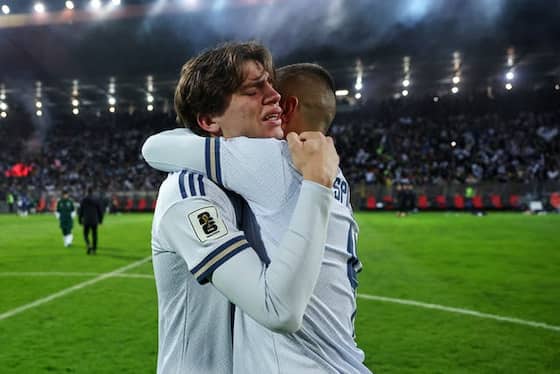
open image in gallery
Italy have failed to qualify for a third consecutive World Cup (AP)
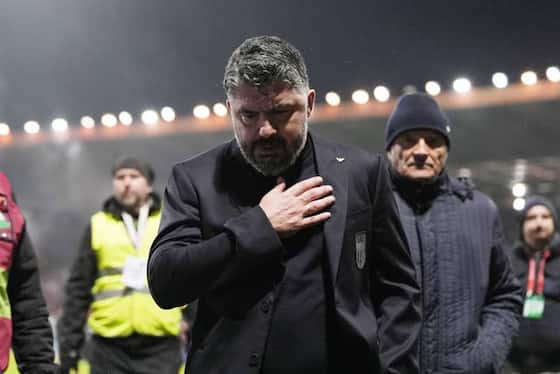
open image in gallery
Italy coach Gennaro Gattuso could not guide his country to this summer’s Finals (AP)
It is both part of a pattern of decline in Italian football and underachievement on an epic scale, explained by individual factors and wider failings. Gattuso, with his peripatetic managerial career, rarely stays anywhere long and felt his future was not the immediate issue; but while he touched heights under coaching greats, in Marcello Lippi and Carlo Ancelotti, too little of their magic may have rubbed off on him. He may have been miscast as a national saviour in the dugout.
But Italy still produces managers as well as players; some comparable with their predecessors, some less so. Of the Azzurri’s hat-trick of failures to qualify for the World Cup, the first was overseen by Giampiero Ventura, the journeyman promoted above his level. Yet the second was under the auspices of Roberto Mancini , who had won Euro 2020. Italy started this qualifying campaign under the 2023 Scudetto winner Luciano Spalletti, though his unravelling at Euro 2024 was an indication he may be better suited to the club game.
The culprits in Zenica on Tuesday night included one of the world’s finest centre-backs, Alessandro Bastoni, who was sent off for a wild challenge, and a striker of genuine promise, in Esposito. The paucity of talent can be exaggerated: four of those who started in Zenica also began last season’s Champions League final, with Gianluigi Donnarumma winning it. Bastoni, Nicolo Barella and Federico Dimarco also began the 2023 final.
There are hugely accomplished players, whether in Riccardo Calafiori or Sandro Tonali; Moise Kean, who had threatened to be the latest striker who would not realise his potential, has now scored in six successive internationals.
The team is less than the sum of its parts. Admittedly, they had the misfortune to end up in a qualifying group with Norway; Erling Haaland represented a cheat code when it came to goal difference. But, Kean’s recent improvement notwithstanding, Italy’s greatest shortcoming of late lies in the final third.
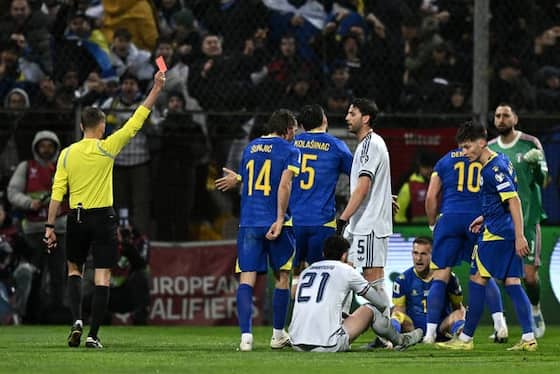
open image in gallery
Alessandro Bastoni’s red card was a turning point against Bosnia and Herzegovina (Getty Images)
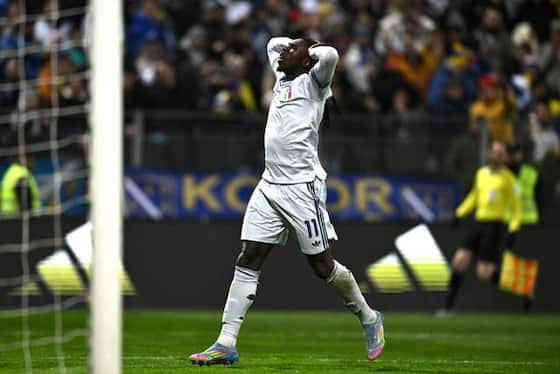
open image in gallery
Despite Moise Kean’s stong form, Italy’s greatest shortcoming of late lies in the final third (Getty Images)
There is no Baggio, no Mancini (indeed, Italy could reach the 1994 World Cup final when neither Mancini nor Gianluca Vialli was even in Arrigo Sacchi’s squad). The conveyor belt of classy Italian No 10s ground to a halt when Francesco Totti and Alessandro del Piero finally finished; the closest since, Lorenzo Insigne, was not trusted by Ventura in 2017, though pivotal for Mancini in Euro 2020.
That Insigne left Napoli for Major League Soccer at 31 hinted at the knock-on effects of Serie A’s financial decline; Mateo Retegui, the Capocannoniere (Serie A’s top scorer) last year, left Atalanta for the Saudi Pro League, looked to have lost his sharpness in the play-off semi-final against Northern Ireland and was substituted against Bosnia after Bastoni’s dismissal. Losing players for paydays has come at a cost.
The picture is mixed, as Italy exports some talent, but the reality that two-thirds of players in Serie A are foreign is likely to be cited - along with the possibility that, as its pulling power has been reduced, they are not always the elite, so do not prepare the Azzurri to face them; so, too, Italy’s other misadventures abroad, with none of its teams – albeit consisting in part of foreigners – in the Champions League quarter-finals, only Atalanta reaching the last 16 and then to lose 10-2 on aggregate to Bayern Munich.
Inter’s recent prowess has painted a different picture, but there are fewer high-class players than there were when Gattuso played in 2006 or Baggio in 1994; or, indeed, when they won the World Cup in 1982, 1938 or 1934. It felt like a failure when Pirlo, Giorgio Chiellini, Gianluigi Buffon crashed out in the group stage in Brazil. But then only one Italy team – the side of 1958 – had failed to qualify for a World Cup. That was the great exception. And now, remarkably, it is the norm.